IRS Deadline: February 1, 2027
E-file 10+ 1099s in the U.S.: IRIS or Vendor, TIN Match

Yes, you can send 1099s electronically, and if you file 10 or more information returns this year, the IRS requires it. You can submit directly through IRIS, the IRS’s free portal, or through a paid platform like TaxFormHero that bundles TIN checks and recipient delivery. Your next move: pull your W-9s together now and decide which route fits your volume.
TL;DR:
- Filing 1099 forms electronically is mandatory if you submit 10 or more information returns in a year, with IRIS being the primary free portal option.
- Proper preparation involves collecting and verifying W-9s early, running TIN matching, and applying for a Transmitter Control Code at least 45 days before filing deadlines.
- Recipient electronic delivery requires documented consent, accessible statements until at least October 15, and paper copies must be provided if requested.
- Most IRS notices stem from TIN and name mismatches, so running TIN matching early and correcting errors electronically can prevent costly rejections.
- Using a paid platform like TaxFormHero simplifies complex filings, including state submissions, TIN verification, and recipient delivery, especially at higher volumes.
How to Send 1099 Forms Electronically: A Quick Checklist
Before you touch a filing portal, get your records in order. Most rejected 1099s trace back to bad data collected months earlier, not a filing glitch.
- Collect W-9s. Confirm every payee’s legal name, address, and taxpayer identification number before year-end, not after.
- Run TIN matching. Check names against TINs where possible to head off IRS notices before they happen.
- Choose your filing route. Decide between filing directly through IRIS or using a paid platform that handles TIN verification, state filing, and recipient delivery in one pass.
- Apply for a TCC if self-transmitting. If you’re filing directly and handling your own transmission, apply for a Transmitter Control Code early. The IRS’s Publication 1220 recommends allowing roughly 45 days for processing.
- Upload and confirm. Submit via manual entry or .csv upload, wait for IRS acceptance, then furnish recipient copies, electronically if you have documented consent, on paper if you don’t.
Pro Tip: File your test batch of 1099s the week they’re ready, not the week they’re due. IRIS can confirm receipt quickly, which gives you a real window to fix rejections instead of scrambling on January 31.
How Do You E-File 1099s Directly With the IRS?
The IRS runs IRIS, the Information Returns Intake System, as its free electronic filing option for 1099 series forms. It’s built for business taxpayers who want to skip third-party software, and it supports three submission methods:
- Manual entry for filers with just a handful of forms.
- .csv upload for moderate volume without needing custom integration.
- Application-to-Application (A2A) transmission for software systems that connect directly to the IRS, documented in Publication 5717 and Publication 5718.
FIRE, the older Filing Information Returns Electronically system, still exists for certain transmitters, and its file specifications follow the layout rules in Publication 1220. Most new filers, though, are steered toward IRIS.
If you’re transmitting returns yourself rather than going through a vendor, you need a Transmitter Control Code. Publication 1220 recommends applying by November 1 of the year before your filing season and budgeting about 45 days for approval. Skip that lead time and you risk missing your window entirely.
One advantage of filing this way: IRIS can confirm receipt quickly, faster than mailing paper returns and waiting on a postmark. If the IRS rejects a submission, usually over a formatting or TIN issue, you correct the file and resubmit through the same system. If you use a third-party transmitter instead, that provider generally handles the TCC on your behalf, which removes one administrative step entirely.
What Are the Rules for Sending 1099s to Recipients Electronically?
Filing with the IRS is only half the job. You also have to furnish a copy to each payee, and electronic delivery here has stricter rules than electronic filing does.
- Get affirmative, documented consent. The recipient must actively agree to electronic delivery, not simply fail to object. That consent must spell out the scope of what’s being delivered electronically, any hardware or software needed to access it, and the recipient’s right to withdraw consent at any time.
- Keep statements accessible. If you’re posting 1099s online rather than emailing PDFs directly, the statement has to stay reachable until at least October 15 of the year following the payment year, and recipients need clear instructions on how to find it.
- Honor paper requests. Any recipient who asks for a paper copy gets one, regardless of prior consent to electronic delivery.
Retain your consent records and delivery logs. If a recipient later claims they never got a 1099, your documentation is what protects you, not your memory of the conversation.
Why Do Most 1099 Notices Happen, and How Do You Avoid Them?
TIN and name mismatches cause the overwhelming share of IRS notices tied to 1099 filings. A payee’s name doesn’t match the TIN on file, and months later you’re holding a CP2100 notice asking you to start backup withholding or send a B-notice to the payee.
- Run TIN matching against IRS records before you file, not after a notice arrives.
- Track deadlines by form: 1099-NEC copies are due to recipients and the IRS by January 31. Non-employee compensation gets no filing extension window the way other forms do.
- 1099-MISC has a later electronic filing deadline, typically March 31 to the IRS, though the exact date shifts slightly depending on the tax year’s calendar.
- File corrections electronically whenever the original return was filed electronically. Under the rules for reporting payments to independent contractors, corrected returns don’t count toward the 10-return e-file threshold, so a batch of corrections won’t suddenly trigger a mandate you weren’t already under.
Since January 1, 2024, any filer submitting 10 or more information returns in a calendar year across all types combined, W-2s, 1099s, and others together, must file electronically. That aggregation catches smaller businesses than the old per-form threshold did.
Should You Use the IRS Portal or a Paid Vendor?
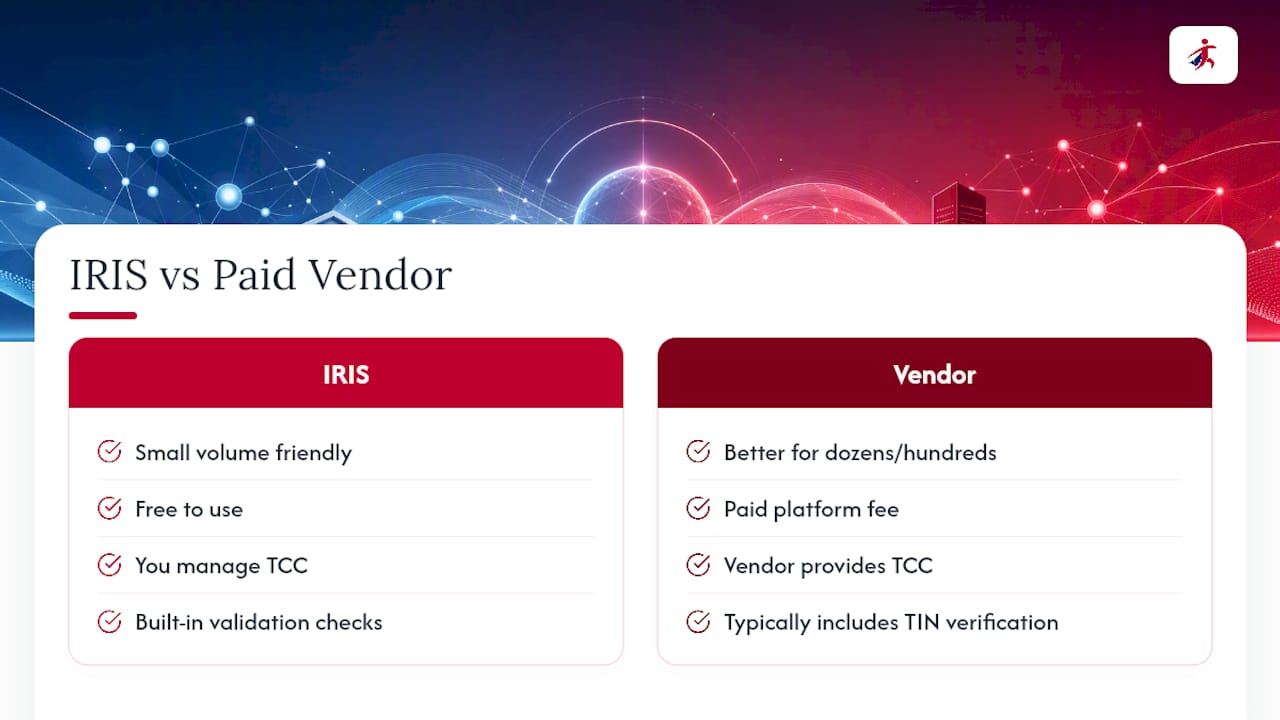
IRIS makes sense if you’re filing a handful of 1099s and don’t mind managing uploads and the TCC process yourself. It’s free, direct, and the IRS built in built-in validation checks into it that flag missing or incorrect information before you transmit, which cuts down on rejections.
A paid platform earns its fee when your filing needs get more complicated than a basic federal submission. Vendors typically bundle TIN verification, combined federal and state filing, printed recipient mailing, and encrypted e-delivery, and you can submit without ever obtaining your own TCC, since the vendor’s credentials cover the transmission.
The decision usually comes down to volume and tolerance for administrative overhead. If you’re filing dozens or hundreds of returns, want state filing handled in the same pass, or would rather not manage a TCC application and its 30 day update requirements, a vendor saves real time. If you’re filing five 1099s for one tax year and nothing else, IRIS costs nothing and does the job.
A Practical Take on Filing 1099s Electronically
The biggest mistake tax pros make isn’t a filing error. It’s waiting until January to think about TINs at all. Every CP2100 notice I’ve seen traced back to a W-9 that should have been collected and checked in October, not scrambled together the week before a deadline.
Vendor fees are worth paying when they save you from hand-keying dozens of returns or chasing a rejected TCC application. They’re not worth paying if you’re filing three forms once a year. Whatever route you choose, keep your consent records and submission confirmations organized. When the IRS asks questions eighteen months later, you want an answer ready, not a memory to rely on.
— Nazrul
Where TaxFormHero Fits Into Your Filing Workflow
TaxFormHero handles the parts of this process that eat the most time: TIN verification, bulk import from spreadsheets, state filing across more than 35 states, and encrypted e-delivery to recipients, all through one IRS-authorized dashboard.
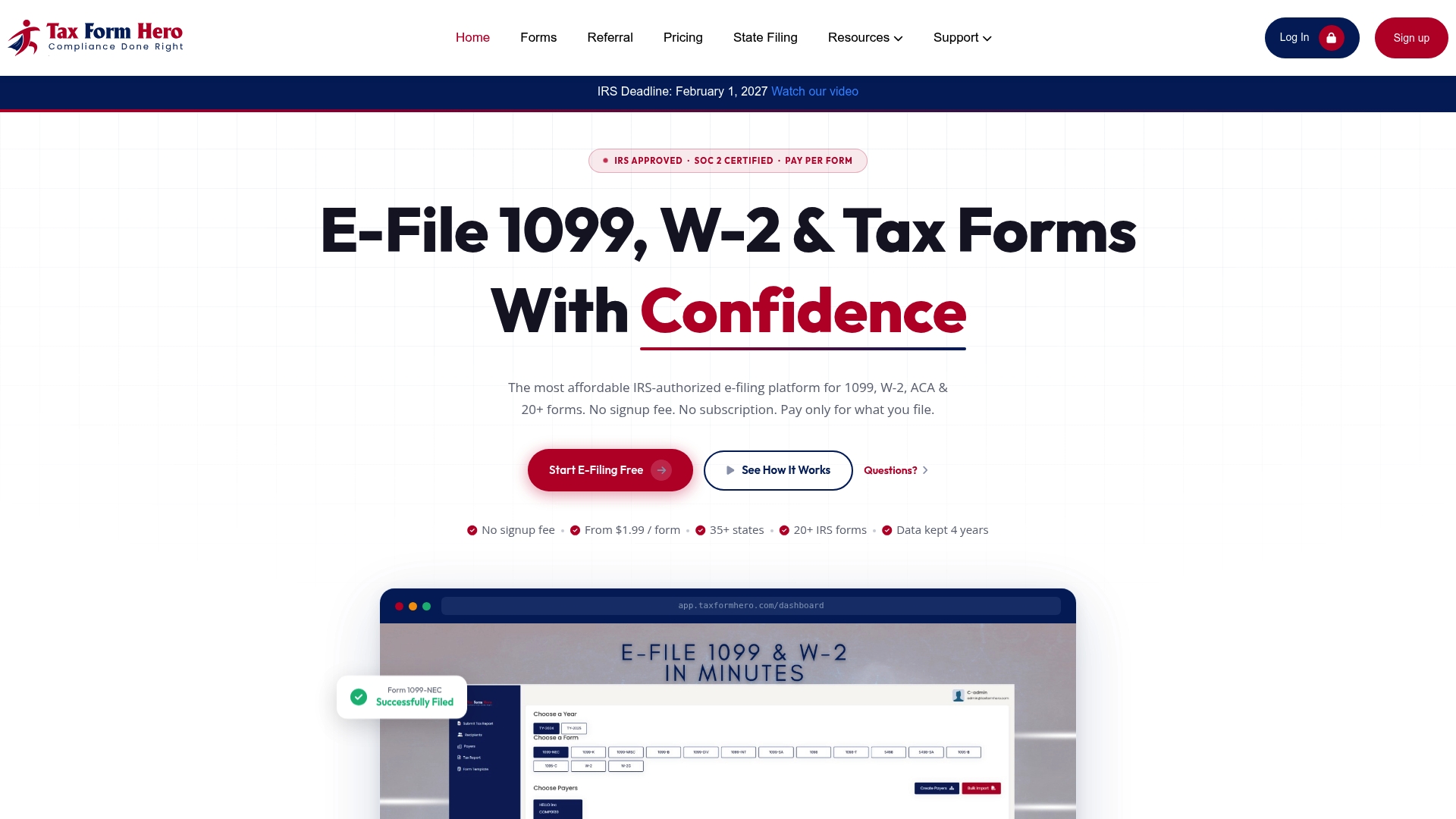
If you’re filing enough 1099s that managing a TCC application and separate state submissions sounds like a hassle, this is where a vendor earns its cost. TaxFormHero charges per form, with no signup fees or subscriptions, so you pay for what you file and nothing else. For current pricing details, visit their website. That structure works whether you’re a solo tax preparer filing for a handful of clients or a payroll department pushing through hundreds of forms before January 31.
Bulk import cuts the manual entry that IRIS requires for larger batches, and print-and-mail plus e-delivery options mean you’re not managing consent tracking and paper backups separately. Start a filing on TaxFormHero to see how your form count prices out, or reach out for a walkthrough if you’re managing a high-volume workflow across multiple clients.
This article is general information, not a substitute for advice from a qualified financial advisor. Consult a qualified financial professional about your own circumstances before acting on anything here.
FAQ
Can a 1099 Be Submitted Electronically?
Yes. The IRS accepts electronic 1099 filings through IRIS or authorized third-party transmitters, and filers submitting 10 or more information returns annually are required to file this way.
How Do You Send a 1099 to the IRS Electronically?
Submit through IRIS using manual entry, a .csv upload, or an A2A connection if you’re transmitting through software, or file through a vendor like TaxFormHero that transmits on your behalf without requiring you to obtain your own TCC.
Is It Better to Fax or Mail 1099s to the IRS?
Neither. The IRS doesn’t accept 1099 filings by fax, and mailing paper returns is slower and no longer an option for anyone filing 10 or more returns, since electronic filing is required at that volume.
Can You Send a 1099 to a Recipient via Email?
Only with affirmative, documented consent that specifies the delivery method, any hardware or software needed, and the recipient’s right to withdraw consent. Without that consent on file, you’re required to furnish a paper copy instead.
If you would rather not do this on paper, file 1099-NEC online with TaxFormHero instead.