
TaxFormHero is the strongest fit for most small businesses filing 1099s in 2026 because it’s IRS-authorized, charges per form instead of locking you into a subscription, and includes TIN verification and bulk import to catch errors before the IRS does. Very low-volume filers with just a handful of contractors may prefer the free IRS IRIS portal instead. Either way, get your filing plan settled before the January deadline crunch.
TL;DR:
- TaxFormHero charges as low as $0.45 per form for bulk filing, making it more cost-effective than subscription-based software for occasional filers.
- The platform supports direct e-filing of multiple form types, including 1099-NEC and W-2, with built-in TIN verification to reduce rejection risk.
- Small businesses should collect W-9s early, verify TINs before filing, and keep detailed records to avoid errors that lead to delays or penalties.
- Filing thresholds are changing in 2026, which may reduce the number of required 1099s and impact whether pay-per-form or subscription pricing is more economical.
- Free IRS portals like IRIS are suitable for very low-volume filers but lack automation features found in paid platforms that save time on larger, regular filings.
What Makes TaxFormHero a Strong Fit for Small Businesses
TaxFormHero is built for the exact filing scenario most small businesses face: a handful to a few hundred 1099s, filed once or twice a year, with zero appetite for tax software that requires a subscription commitment. The platform is IRS-authorized for e-filing, which matters more than it sounds. Authorization means your forms route directly into the IRS’s information return systems rather than through a third party hoping the transmission works.
TaxFormHero supports 1099-NEC, 1099-MISC, W-2, ACA forms, and more than 20 other IRS form types, so you’re not juggling separate tools for contractors and employees. Beyond forms, a few features carry real weight:
- Bulk CSV import for businesses with dozens or hundreds of recipients
- Built-in TIN verification to flag mismatched names and numbers before submission
- Direct state filing for more than 35 states
- Encrypted e-delivery and print-and-mail options for recipient copies
- 256-bit encryption with SOC 2-ready data handling
Pricing starts at $1.99 per form, with volume tiers dropping as low as $0.45 per form for larger batches. That’s the core difference from subscription-based accounting suites: you pay for what you file, not for a year-round license you might use twice.
If you would rather not do this on paper, e-file Form 1099-NEC online with TaxFormHero instead.
What to Prioritize When Choosing 1099 Software
Not every platform marketed as “1099 software” actually covers what you need. Before you commit, run through this checklist.
- Confirm form coverage and e-file support. The software should handle both 1099-NEC and 1099-MISC, plus e-file directly to the IRS rather than generating a PDF you have to upload elsewhere.
- Check for TIN matching and W-9 collection tools. IRS guidance on TIN formatting exists because mismatched names and numbers are the single biggest cause of rejected filings and backup withholding notices.
- Test the CSV import against your actual bookkeeping export. A tool that claims to “integrate” with QuickBooks or Xero but chokes on your specific field formatting will cost you more time than it saves.
- Verify state filing coverage. Not every platform files state returns for every state, so confirm your state is covered before assuming the software handles that obligation for you.
- Ask about correction and refund policies upfront. Hidden add-on fees for corrections, or vague refund terms if a filing fails, are the most common source of buyer’s remorse.
Watch for the 2026 threshold changes, too. Under recent legislative updates, some reporting thresholds are rising, which means a business that filed a dozen 1099s last year might file fewer this year. That shift changes whether pay-per-form or subscription pricing makes more sense for you.
Pro Tip: Don’t wait until January to chase down W-9s. Collect one from every contractor before you send their first payment, and store it directly in their vendor file. For more practical reminders, see this year-end tax planning checklist." This one habit prevents most of the scrambling that leads to late or incorrect filings.
How to File 1099s With a Pay-Per-Form Service
The workflow is more predictable than most first-time filers expect, provided you follow the sequence in order.
- Collect W-9s at onboarding. Every contractor should submit one before their first payment, not after. Store them attached to the vendor record so nothing gets lost by tax season.
- Export the required fields from your accounting system. Your CSV needs legal name, TIN, address, and total payments per recipient at minimum.
- Run TIN matching before you file. Fixing a mismatched name or number now takes minutes. Fixing it after a rejected filing takes days.
- Choose e-delivery or print and mail. E-delivery is faster and cheaper but requires recipient consent under IRS rules, so confirm you have it on file.
- Submit and save your confirmation. If you spot an error after filing, most paid platforms offer a corrections workflow that’s far simpler than amending through the free IRS portals.
A few habits make this smoother across the board:
- Keep a running vendor list updated throughout the year, not just in December
- Double-check totals against your books before export, not after
- Save every filing confirmation in one folder for easy audit reference
IRS IRIS and FIRE: The Free Filing Options
The IRS Information Returns Intake System (IRIS) lets you e-file 1099 series forms at no cost, either through manual entry or CSV upload. FIRE, the older system, accepts machine-formatted files under Publication 1220 and suits filers with technical staff who can build compliant file layouts.
Both routes work. Neither includes the conveniences paid platforms build in.
- No integrated TIN-matching API, so you verify numbers manually
- Limited or no recipient e-delivery, meaning more print-and-mail work
- Reviews of the free portal note it’s genuinely free but manual by design
If you’re filing five forms once a year, IRIS is fine. If you’re filing fifty and want fewer manual steps, a paid platform earns its fee back in saved time.
Calculating Your Real 1099 Filing Costs
The math is straightforward: per-form price times expected form count, plus any add-ons like state filing or print and mail. Per-form pricing for 20 contractors can cost less than a typical monthly accounting subscription.
- Pay-per-form pricing tends to win for businesses filing occasionally or seasonally
- Subscription platforms can be more cost-effective if you’re running continuous contractor payroll year-round with frequent onboarding
- Factor in hidden costs too: staff time cleaning up a messy CSV, correction fees after a rejected filing, and state filing charges that some platforms tack on separately
Statistic callout: A business filing under the old $600 NEC threshold might file zero 1099s under the 2026 threshold changes for certain payment categories, which changes the pay-per-form math entirely.
Why Small Filing Errors Cause Big Headaches

The recurring problem I see isn’t complicated tax law. It’s operational: a contractor’s W-9 arrives in March instead of January, or their legal name doesn’t match what the IRS has on file. Both cost hours of rework and can trigger backup withholding notices nobody wants to deal with.
A workflow built around year-round W-9 collection and upfront TIN verification prevents almost all of it. The businesses that struggle every January are usually the ones treating 1099 prep as a once-a-year scramble instead of an ongoing vendor management habit.
— Nazrul
Get Started With TaxFormHero
TaxFormHero gives you IRS-authorized filing with bulk import, TIN verification, and pay-per-form pricing that starts at $1.99 and drops to $0.45 for higher volumes, without a subscription fee eating into your budget every month.
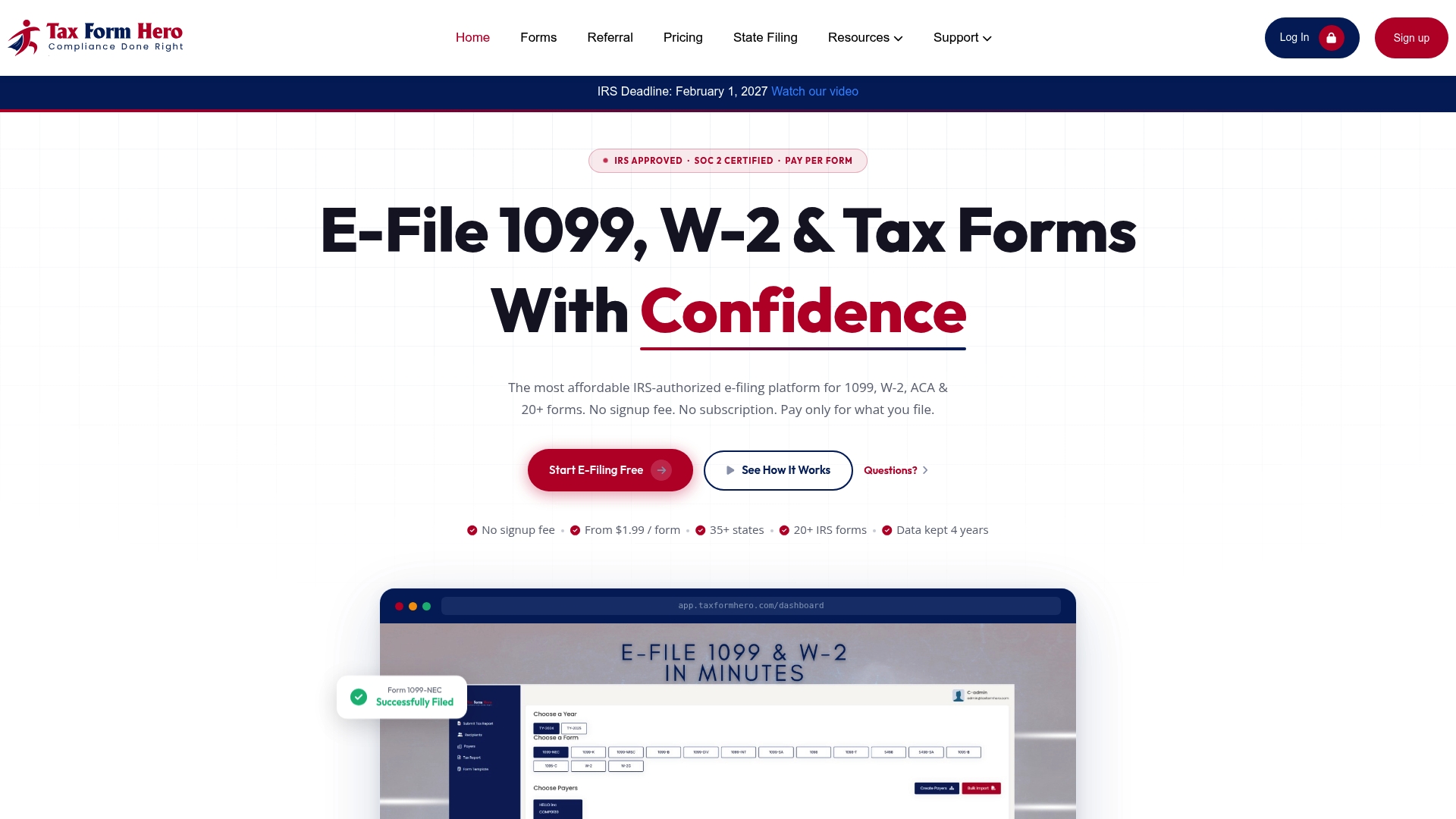
Getting started takes three steps: create a free account, upload your contractor list by CSV or enter recipients manually, then choose any add-ons you need, like state filing or print and mail, before submitting. There’s no signup fee and no charge until you actually file. If your contractor list is ready, you can start filing your 1099s today and have confirmations in hand well before the deadline.
This article is general information, not a substitute for advice from a qualified financial advisor. Consult a qualified financial professional about your own circumstances before acting on anything here.
Sources
- Reporting payments to independent contractors | Internal Revenue Service
- Your Essential Guide to Form 1099-NEC and 1099-MISC Reporting
- How to File 1099 Forms Online (2026): Complete Guide | Quarterly1099
Recommended

File Information Returns With Confidence
TaxFormHero supports 20+ IRS information returns, including 1099 and W-2 forms, with bulk Excel import, name/TIN matching and encrypted recipient delivery.
Explore TaxFormHero