ACA AIR Filing: IRS Workflow, Checklist, and Platform Option for Payroll

Filers who submit 10 or more information returns in the aggregate must e-file Affordable Care Act forms through the IRS AIR system, using either the UI channel for manual uploads or A2A for automated, system-to-system transmissions. Before transmitting production data, transmitters must register for a Transmitter Control Code, pass AATS testing, and build a Manifest and Form Data File that meet IRS schema rules.
TL;DR:
- A2A requires approved digital certificates, ASID registration, and SOAP headers that follow IRS communication rules, while UI filers avoid that infrastructure.
- Each transmission is limited to 100 MB of uncompressed XML and cannot mix B and C forms, so large filings need separate batches.
- Once required AATS scenarios return Accepted or Accepted with Errors, confirm readiness with the AIR Help Desk, then wait 48 hours before production.
- A Receipt ID proves delivery, not acceptance; wait about 10 minutes before requesting the acknowledgement, then correct only records flagged in accepted files.
- ACA electronic returns are generally due March 31 of the year after the coverage year; hardship filers should submit Form 8508 well before the deadline.
Who Must File and How to Register for a TCC
The 10-or-more threshold counts information returns in the aggregate across the forms a filer submits in a calendar year, not per form type, so issuers close to the line should track volume across all return types before assuming paper filing is still an option. The AIR program page confirms this aggregate rule applies to Forms 1094-B, 1095-B, 1094-C, and 1095-C, and it notes that filers below the threshold may still e-file voluntarily.
Three roles interact with AIR, and each has different registration needs:
- Issuer: the entity legally required to file ACA returns, such as an employer or insurer.
- Transmitter: the entity that sends the data to the IRS, which must hold its own TCC.
- Software Developer: the entity that builds filing software, which registers separately to obtain a software identifier.
Responsible Officials complete registration through an e-Services account, which now requires identity verification through ID.me before a firm can request a TCC or access AIR testing and production environments.
If you would rather not do this on paper, e-file Form 1095-C online with TaxFormHero instead.
AIR Transmission Methods: UI vs A2A
AIR supports two distinct channels, and the right one depends on filing volume and how much of the process a team wants to automate.
- ISS-UI (web interface): manual upload of a Manifest and Form Data File through a browser, suited to issuers filing occasionally or in smaller batches.
- ISS-A2A (application-to-application): automated SOAP and MTOM transmissions between a filer’s system and the IRS, suited to high-volume transmitters with integrated payroll or tax software.
Publication 5165 specifies that A2A requires approved digital certificates, ASID registration, and SOAP headers that conform to the IRS Communication Requirements Guide, while UI filers skip that infrastructure entirely. Both channels share the same hard limit: uncompressed XML payloads cannot exceed 100 MB, and a single transmission cannot comingle Forms 1094/1095-B submissions with Forms 1094/1095-C submissions.
Pro Tip: Run your Form Data File through a local XML validator, such as Altova XMLSpy, SoapUI, or XMLmind, before uploading it to either channel; catching namespace errors locally saves a full AATS or production resubmission cycle.
AATS Testing and Automated Enrollment: Steps and Pitfalls
Transmitters, issuers transmitting their own returns, and software developers must each complete Automated Enrollment and AATS testing before sending production data. Publication 5164 lays out the required scenarios and the sequence that moves a filer from test to production status.
- Select the AATS test scenarios that match your form type and filing volume, as listed in Publication 5164.
- Submit test transmissions and confirm each one returns a status of “Accepted” or “Accepted with Errors.”
- Contact the AIR Help Desk once testing scenarios are complete to confirm production readiness.
- Wait 48 hours after receiving confirmed production status before transmitting live data, a window Publication 5164 requires to avoid TCC validity errors.
Common pitfalls that stall this process include schema version mismatches between the filer’s XML and the current IRS schema, an incorrect or missing TestFileCd value, and attempting to transmit before a Software ID or TCC shows an active status in the system. Each of these produces a rejection that looks like a data problem but is actually a setup problem, so confirming account and schema status first avoids wasted test cycles.
Composing a Valid Manifest and Form Data File
Every AIR transmission consists of two linked files: a Manifest and a Form Data File. Publication 5258 describes the Manifest as the header record that identifies the transmitter, payload type, and submission count, using elements like ACABusinessHeader and the Request Manifest Details that tell AIR what the accompanying Form Data File contains.
- The Manifest and Form Data File must reference each other correctly, or AIR cannot match the payload to its header.
- The Form Data File must be uncompressed, native XML, never zipped or converted.
- Every Transmission ID, Submission ID, and Record ID inside the file must be unique within that submission.
- A single file can hold only Form 1094/1095-B submissions or only Form 1094/1095-C submissions, never both.
The uncompressed XML payload in any single AIR transmission cannot exceed 100 MB, a hard ceiling that pushes high-volume filers toward batching logic that splits large recipient populations into multiple transmissions rather than one oversized file.
Special characters and encoding mismatches are a frequent source of rejected files, so validating the XML against the current published schema before upload, rather than after a rejection, remains the more efficient path for both UI and A2A filers.
Acknowledgements, Rejections, and How Corrections Work
Once a transmission uploads successfully, AIR issues a Receipt ID, which Publication 5258 describes as proof the IRS received the file, not proof it was accepted. The AIR program page also recommends a short wait, around 10 minutes, after receiving a Receipt ID before requesting the acknowledgement, since immediate status checks can return a false “file not found” response.
- Use the Receipt ID to request the acknowledgement file once processing has had time to complete.
- An “Accepted” status means the submission is complete; “Accepted with Errors” means the IRS received usable data but flagged specific records, which the filer should review in the error data file; “Rejected” means the transmission itself failed and needs to be resubmitted as new.
- For accepted submissions with record-level errors, file corrections referencing only the specific records that need fixing rather than resending the entire batch.
- For rejected transmissions, submit a replacement that changes the Unique Transmission ID, the
DocumentSystemFileNm, and theChecksumAugmentationNum, or sets theTransmissionTypeCdto “R” and references the original Receipt ID, so AIR treats it as new data rather than a duplicate.
Pro Tip: Keep a log mapping each error code you encounter to the explanation in Publication 5258; AIR error messages are often TPE-prefixed codes that mean little without that cross-reference.
Deadlines, Waivers, and Penalty Exposure
ACA information returns filed electronically are generally due by March 31 of the year following the coverage year, while recipient copies of Forms 1095-B and 1095-C follow a separate furnishing deadline. Filers facing a genuine hardship can request additional time using Form 8508, which should be submitted well before the filing deadline since the IRS does not guarantee a decision on short notice.
- Electing to file on paper when the aggregate 10-or-more threshold applies does not satisfy the e-filing requirement.
- Penalties can apply specifically for failing to file electronically when required, separate from penalties for late or incorrect returns.
- A rejected transmission generally allows a limited window to submit a corrected replacement without it counting as a late filing, provided the replacement is submitted promptly.
Teams closer to the aggregate threshold should also review how the e-file threshold interacts with other information returns they file during the same year, since the count is cumulative across return types.
Pre-Filing Checklist for Transmitters and Issuers
A short, ordered checklist keeps a filing team from discovering a registration or schema gap during the week returns are due.
- Confirm the e-Services account is active and the TCC shows active status for the filing season.
- Download the current AIR XML schemas and Business Rules before building any transmission file.
- Validate the Form Data File locally against the current schema before any upload attempt.
- Run the required AATS scenarios, save every Receipt ID, and document each test result.
- Contact the AIR Help Desk once all scenarios show “Accepted” and before moving to production.
- Split any payload approaching the 100 MB limit into separate transmissions with unique Transmission IDs.
- Retain backups of submitted files and a written record of all Help Desk communications.
How an IRS-Authorized Platform Simplifies AIR Filing
Teams that would rather not build and maintain A2A infrastructure in-house can route ACA filing through an IRS-authorized e-filing platform instead of managing certificates, schemas, and AATS testing directly.
- Bulk import of recipient and coverage data from Excel or CSV templates, rather than manual entry per form.
- Built-in XML validation before transmission, reducing the schema errors that cause AATS and production rejections.
- TIN matching before filing, which lowers the chance of a record-level error on an otherwise accepted submission.
- State filing add-ons for jurisdictions with their own ACA reporting requirements.
We operate as an IRS-authorized e-filing platform with a SOC 2 Type I attestation, pay-per-form pricing with no subscription, and support resources for filers who want AIR mechanics handled rather than managed line by line.
Practical Pitfalls and Audit-Minded Recordkeeping

The teams that avoid late-season scrambles are the ones that treat testing evidence as a compliance record, not paperwork to discard. When a TIN cannot be corrected before the deadline, document every verification attempt rather than leaving a gap.
Save every Receipt ID, acknowledgement, and AATS test result; those records are the strongest defense if the IRS later questions a filing. Validate schemas early in the season rather than the week returns are due, since a rejected test in March costs far less than a rejected production transmission in April.
— Nazrul
Filing ACA Forms Without Building Your Own AIR Connection
We built our platform so that ACA filers do not need to manage certificates, SOAP headers, or schema versions themselves.
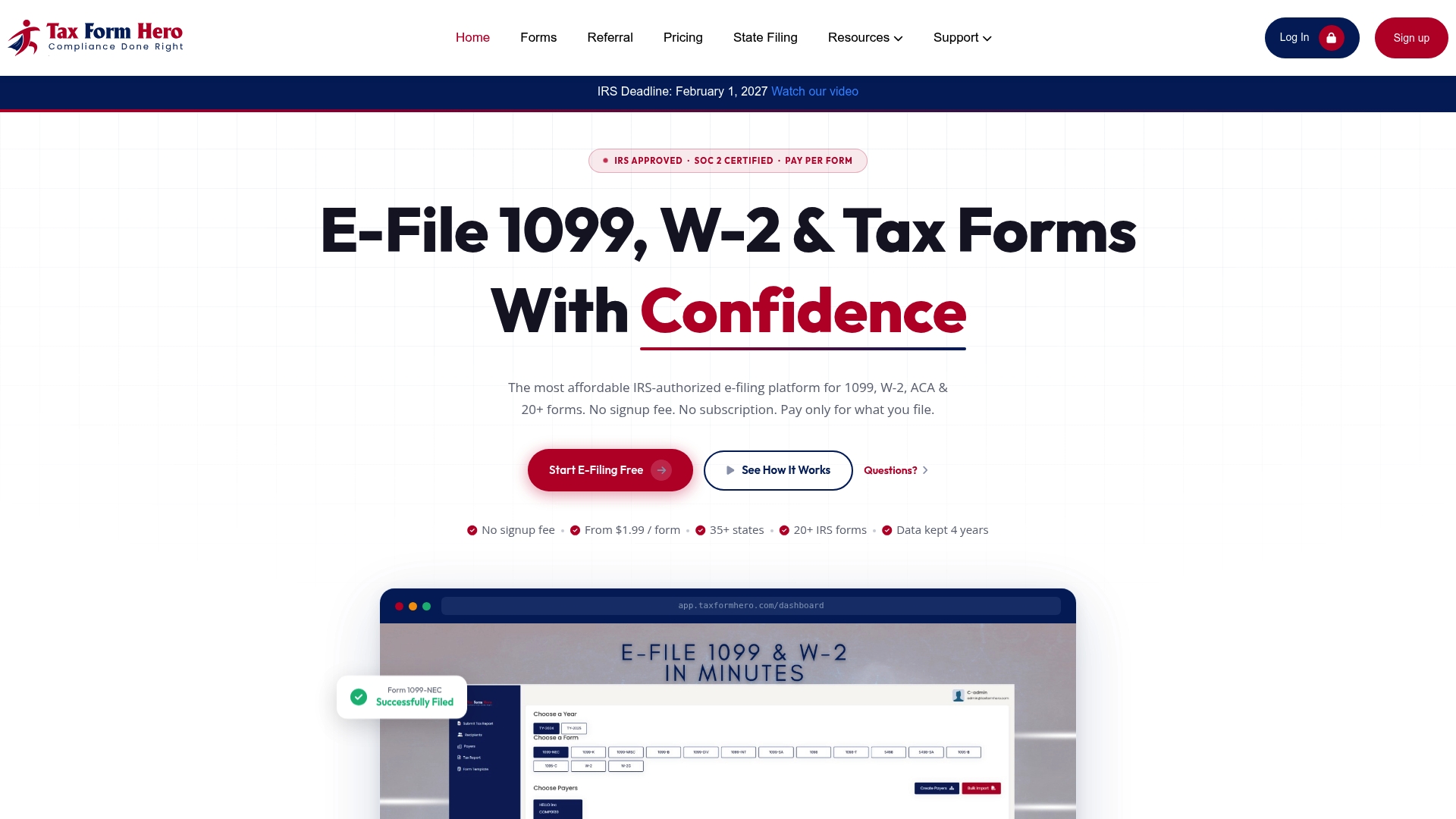
- Import recipient and coverage records in bulk from a spreadsheet instead of entering them one by one.
- Run TIN matching before submission to catch mismatches that would otherwise trigger record-level errors.
- Transmit federal ACA returns through IRIS A2A on our end, so the A2A infrastructure is not something your team has to maintain.
- Add state filing, print and mail, or encrypted e-delivery as separate per-form options, only when you need them.
Our ACA e-filing option runs on pay-per-form pricing with no subscription or signup fee, under an IRS-authorized, SOC 2 Type I attested platform. Start a return to see the current per-form cost before you commit to a batch.
FAQ
Is ACA Reporting Still Required for 2026?
Yes. The aggregate 10-or-more information return threshold still requires electronic filing of ACA returns through AIR for the 2026 filing season, and filers below that threshold may still e-file voluntarily.
What Are the ACA Electronic Filing Requirements?
Filers required to e-file must register for a Transmitter Control Code through e-Services, pass AATS testing as described in Publication 5164, and transmit a Manifest paired with a Form Data File through either the UI or A2A channel.
Can I File ACA Forms Electronically Myself, or Do I Need Software?
You can file directly through the AIR UI channel for manual uploads, build an A2A connection following Publication 5165, or use an authorized platform that transmits on your behalf; the right choice depends on filing volume and in-house technical capacity.
What Happens if My AIR Transmission Is Rejected?
A rejected transmission must be resubmitted as a replacement with a new Unique Transmission ID and related identifiers, or with the TransmissionTypeCd set to “R” referencing the original Receipt ID, so the system does not treat it as a duplicate of the failed file.
Recommended
- Best IRS FIRE System Alternative for 2026 Filing
- Avoid a 45 day TCC Delay: IRS IRIS 1099 Filing for U.S. Businesses
- How to E-File 1095-C in 2026: ACA Compliance Guide

File Information Returns With Confidence
TaxFormHero supports 20+ IRS information returns, including 1099 and W-2 forms, with bulk Excel import, name/TIN matching and encrypted recipient delivery.
Explore TaxFormHero