2025–2026 1099 Digital Asset Rules: How U.S. Filers Reconcile Reports
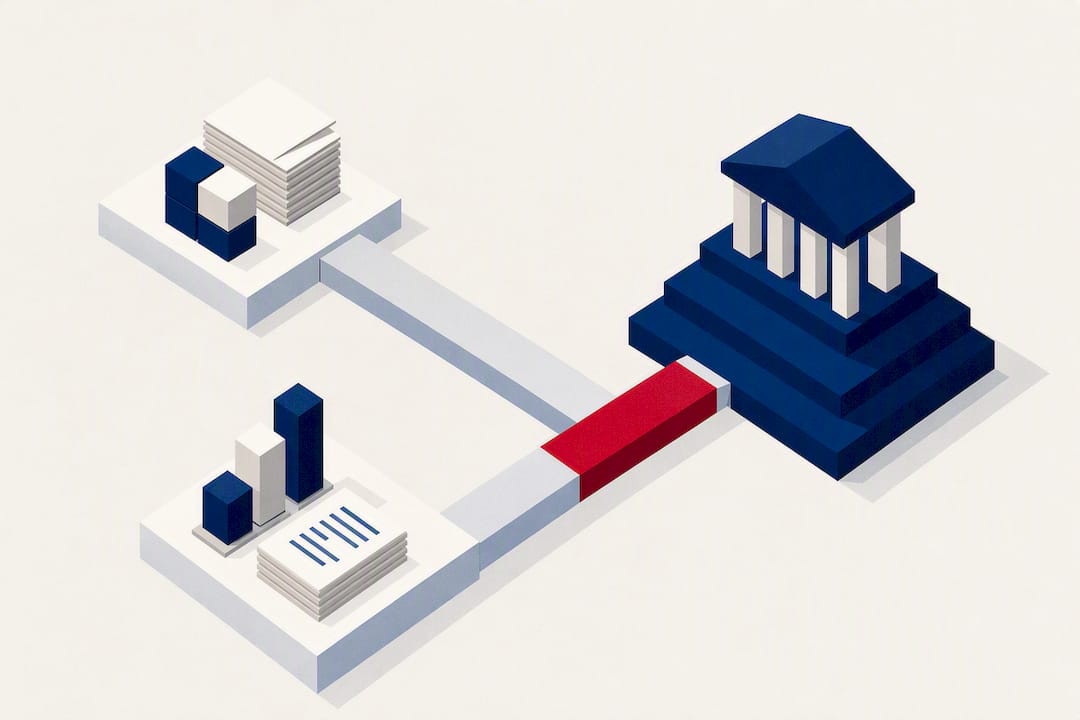
Form 1099-DA reports gross proceeds from digital asset sales made through custodial brokers, starting with transactions on or after January 1, 2025. Beginning January 1, 2026, those same brokers must also report cost basis for covered assets, meaning ones acquired and held in that same account after that date. Your next move is straightforward: pull your broker’s 1099-DA, cross-check it against your own trade history, and use the reconciled figures to complete Form 8949 and Schedule D.
TL;DR:
- Brokers must report gross proceeds from digital asset sales starting in 2025, with cost basis reporting for covered assets beginning in 2026.
- Only custodial platforms that hold assets and execute trades on your behalf are required to issue 1099-DA forms; noncustodial and decentralized exchanges are currently exempt.
- For assets acquired before 2026, brokers report only gross proceeds, while basis reporting for assets acquired after 2026 is mandatory and may be voluntary for certain noncovered assets.
- When reconciling 1099-DA with your records, verify transaction details, flag unverified basis, and calculate your own basis for noncovered lots to avoid errors.
- Good recordkeeping, including transaction exports and timestamps, remains crucial, as early 1099-DA forms may contain inaccuracies due to ongoing infrastructure development.
What Is Form 1099-DA and Why It Exists
Form 1099-DA is an IRS information return that custodial brokers file to report proceeds from digital asset transactions. It exists for one reason: to let the IRS match what a broker reports against what a taxpayer claims on their return. Before this form, crypto exchanges had no standardized way to tell the IRS what customers were buying, selling, or trading, which made digital asset income one of the easiest categories to underreport, intentionally or not.
The form’s legal foundation sits in final regulations and related IRS guidance for reporting by brokers on sales and exchanges of digital assets under section 6045 of the tax code, the same statute that has long governed broker reporting for stocks and bonds. The IRS essentially extended securities-style reporting to crypto, NFTs, and other digital assets, treating a Bitcoin sale the same way it treats a stock sale on a 1099-B.
Several transaction types trigger a 1099-DA:
- Selling a digital asset for cash (US dollars or another fiat currency)
- Exchanging one digital asset for another, such as trading Ether for a stablecoin
- Using a digital asset to pay for goods or services through a broker or payment processor
- Broker-initiated dispositions used to cover transaction fees, in some cases
That last category catches people off guard. If your exchange automatically sells a fraction of your holdings to cover a network fee, that small disposition can be a reportable event, even though you never intended to “sell” anything. The IRS’s matching system does not distinguish between deliberate trades and mechanical fee sweeps. Both show up as gross proceeds unless your broker documents them differently.
For tax professionals, the practical upshot is that 1099-DA closes a gap that has existed since crypto trading went mainstream. For individual filers, it means the IRS now has a paper trail on activity that many people used to treat as informal.
If you would rather not do this on paper, e-file Form 1099-DA online with TaxFormHero instead.
Who Must File and Who Receives a 1099-DA
A “broker” under the final regulations means any custodial platform that takes possession of a customer’s digital assets and effects a sale on their behalf. That includes centralized trading platforms, hosted wallet providers, certain digital asset kiosks, and payment processors handling digital asset transactions (PDAPs) when they take custody to complete a transaction.
Custody is the deciding factor. If a platform holds your private keys, or otherwise controls your assets, and executes trades on your behalf, it likely qualifies as a broker under these rules. If you hold your own keys in a noncustodial wallet and trade through a decentralized exchange, no single entity has custody of your assets, so no one is currently obligated to file a 1099-DA for that activity.
That distinction matters because it splits the digital asset world into two reporting realities. Custodial platforms, the exchanges most retail investors use, now carry the same reporting duty a traditional brokerage has for stock trades. Decentralized protocols, for now, sit outside that requirement entirely.
A few practical signals tell you whether a platform will send you a 1099-DA:
- You created an account and completed identity verification (KYC) to use the platform
- The platform displays account statements or transaction confirmations, similar to a brokerage statement
- You transfer assets into the platform’s custody rather than trading directly from your own wallet
- The platform executes the sale or exchange itself, rather than routing it to a smart contract you control
Pro Tip: Do not assume silence from a platform means no taxable event occurred. Decentralized exchanges and peer-to-peer trades are just as taxable as custodial ones. They are simply exempt from the broker’s reporting duty, which shifts the entire recordkeeping burden onto you.
Covered vs Noncovered Assets and the 2025–2026 Timeline
The phased rollout creates two categories of digital assets, and the date you acquired them determines which one applies. Covered assets are those you acquire on or after January 1, 2026, in the same custodial account where they are later sold. For these, your broker must report both gross proceeds and cost basis on your 1099-DA. Noncovered assets are ones you acquired before that date, or transferred in from another wallet or platform. For those, brokers generally report only gross proceeds, though they may voluntarily report basis and check Box 9 to flag that the figure is unverified.
According to the Instructions for Form 1099-DA, this covered/noncovered split exists because brokers cannot reliably verify what you paid for assets you held elsewhere before moving them into their custody. Basis reporting only becomes mandatory once the broker has watched the asset from acquisition to disposition inside its own system.
| Reporting element | 2025 (gross proceeds phase) | 2026 (basis phase begins) |
|---|---|---|
| Gross proceeds reporting | Required for all custodial broker transactions | Continues, required |
| Cost basis reporting | Not required | Required for covered assets acquired in 2026 or later |
| Noncovered asset basis | Not applicable yet | Voluntary, Box 9 checked if unverified |
| Backup withholding relief | Transition relief available | Continues through 2026 |
Transition relief softens the rough edges of this rollout. For transactions occurring in calendar year 2025, the IRS will not penalize brokers for failing to file or furnish accurate 1099-DA statements, provided they made a good-faith effort to comply on time. That relief does not extend to you as a taxpayer. You still owe tax on every reportable transaction, whether or not your broker’s form was late or imperfect.
The rules also carve out de minimis exceptions and optional reporting methods for certain qualifying stablecoins and specified NFTs, letting brokers use simplified aggregate reporting rather than transaction-by-transaction detail in narrow circumstances. If you trade heavily in stablecoins, expect your 1099-DA to look different from a form built around Bitcoin or Ether trades.
What Each Box on Form 1099-DA Means
Reading a 1099-DA for the first time can feel like decoding a spreadsheet with no legend. Here is what matters, box by box.
- Box 1a, Digital Token Identifying Fingerprint (DTIF). This code identifies the specific digital asset. If the asset has no registered DTIF, the broker enters
999999999as a placeholder. - Box 1b, name of digital asset. A plain-language identifier, such as “Bitcoin” or “Ether.”
- Box 1c, number of units. Reported to 18 decimal places, reflecting how granular fractional crypto holdings can get.
- Box 1d, date acquired. When you obtained the asset, relevant for determining holding period and short-term versus long-term treatment.
- Box 1e, date sold or disposed. When the reportable transaction occurred.
- Box 1f, gross proceeds. The total amount received from the sale or exchange, before any basis is subtracted.
- Box 1g, cost basis. What you paid for the asset, populated only for covered transactions or when a broker voluntarily reports it.
- Box 9, noncovered security checkbox. Marked when the broker has not verified the basis figure, warning you and the IRS that the number in Box 1g is unconfirmed.
Tokenized securities carry an added wrinkle: brokers use CUSIP numbers, the same identifiers used for stocks and bonds, rather than a DTIF, since these instruments are registered securities wrapped in a digital asset structure.
Statistic to watch: the general rule is one transaction per form, but the final IRS guidance permits limited aggregation methods for certain high-volume, low-value transactions, which is why frequent traders sometimes receive a 1099-DA that looks shorter than their actual transaction count would suggest.
A quick reconciliation checklist before you file: confirm the DTIF or asset name matches your records, verify the number of units against your wallet export, check whether Box 9 is marked before trusting Box 1g, and flag any noncovered lot where basis is blank so you know you need to calculate it yourself.
How to Reconcile 1099-DA With Form 8949 and Schedule D
Form 1099-DA is an input to your tax return, not the tax calculation itself. The actual gain or loss computation happens on Form 8949, which then flows to Schedule D. Treat every 1099-DA the way you would treat a 1099-B: a starting point you verify, not a final answer you copy blindly.
When you transcribe entries, covered and noncovered transactions need different treatment. For covered assets with basis already reported, you can generally transfer the broker’s figures directly, checking the box on Form 8949 that indicates basis was reported to the IRS. For noncovered assets, you need to separately determine and document your own basis, using the box that indicates basis was not reported.
If basis is missing or looks wrong, work through this sequence:
- Pull the complete transaction export from your broker, not just the 1099-DA summary
- Cross-reference against your own wallet history, exchange statements, or portfolio-tracking software
- Apply Revenue Procedure 2024-28’s transitional methodology to allocate unused basis to remaining units as of January 1, 2025, if you are untangling a mixed acquisition history
- Contact the broker directly and request a corrected 1099-DA if their number is demonstrably wrong
- Document every adjustment you make, in case the IRS later asks why your reported basis differs from the form
Pro Tip: Keep a running basis worksheet separate from your tax software. When a broker later issues a corrected 1099-DA, and corrections are common in early filing years, you want your own paper trail to show exactly how you arrived at your original number.
If your digital asset activity spans several platforms, multiple wallets, or years of holding history, this is where a tax professional earns their fee. An amended return is far cheaper to avoid than to file, and basis errors on digital assets are exactly the kind of mistake that triggers IRS correspondence.
Common Mistakes and Recordkeeping That Actually Holds Up
The single most common taxpayer error with digital assets is confusing a transfer with a sale. Moving Bitcoin from an exchange to your own hardware wallet is not a taxable event. Some broker systems misclassify these transfers as dispositions, especially when the receiving address is not clearly tagged as belonging to you. If your 1099-DA shows proceeds for something you know was a wallet-to-wallet transfer, that is worth disputing before you file, not after.
Foreign exchanges and noncustodial platforms present the opposite problem: no form at all, but a taxable event that still exists. The IRS has been explicit that taxpayers must report all income, gains, and losses from digital asset transactions regardless of whether a 1099-DA was issued. Staking rewards are a good example. Many staking platforms, particularly decentralized ones, will not send you any form, yet the reward’s fair market value at receipt is taxable income the moment you have control over it.
Solid recordkeeping is what protects you when a form is missing or wrong. At minimum, maintain:
- Full transaction exports from every exchange or wallet you use, downloaded periodically rather than only at tax time
- Timestamps and transaction IDs (TXIDs) for transfers, so you can prove a movement was not a sale
- A cost basis worksheet tracking acquisition date, price, and lot identification method (FIFO, LIFO, or specific identification)
- Records retained for at least three years after filing, longer if you have significant unreported positions from prior years
Pro Tip: If you use several exchanges and one noncustodial wallet, tag every noncustodial transaction the moment it happens. Reconstructing intent six months later, sale versus transfer, is far harder than noting it in real time.
For tax professionals managing multiple clients with mixed custodial histories, the practical workflow is to request every client’s raw exchange exports before touching the 1099-DA, standardize the import format across clients, and flag any noncovered lot with a blank basis field for manual calculation before it ever reaches the return.
Transition Relief, Penalties, and Notices Worth Monitoring
The IRS built real breathing room into this rollout, but only for brokers, not for taxpayers who simply fail to report income. For 2025 transactions, the IRS will not impose penalties on brokers for filing or furnishing failures, as long as they made a good-faith effort to comply on time. Backup withholding relief runs on a similar track, extending through 2026, and TIN-matching requirements tighten further starting in 2027.
Penalty exposure under sections 6721 and 6722, the standard information-return penalty provisions, works differently depending on whether a broker voluntarily reports basis for noncovered assets. A broker that checks Box 9 to flag unverified basis carries less penalty risk than one that reports a basis figure without flagging it and turns out to be wrong.
Three documents are worth bookmarking if you want to track this area as it evolves:
- Notice 2024-57, covering the initial transition relief framework
- Revenue Procedure 2024-28, addressing basis allocation methodology for the 2025 transition
- TD 9989, the final regulations that anchor the entire 1099-DA framework in section 6045
Expect incremental updates as the basis-reporting phase takes full effect in 2026. Brokers are still building the infrastructure to track lot-level basis across custodial accounts, and early filing seasons under this regime are likely to produce more corrected forms than a mature reporting system would.
What Tax Pros and Filers Should Do Now
The biggest planning mistake I see coming is treating 1099-DA like a fully solved problem just because the form exists. It is not. The gross proceeds phase is relatively mechanical, but the basis phase starting in 2026 depends on brokers building tracking systems that, in many cases, are still catching up to the regulation’s demands. Do not assume a number on the form is correct simply because it came from an official source.
If you are an individual filer, your checklist starts today: collect every broker’s transaction export, reconcile it against your own trade history, and compute basis yourself for any noncovered lot where Box 9 is checked. Do not wait for tax season to discover a gap.
If you run a tax practice, standardize how you ingest broker data now, before volume increases. Build a basis-validation step into your intake process for every client with digital asset activity, and brief clients in advance about what changes when 2026 acquisitions start showing up as covered assets. Watch the IRS and Treasury for updates to Notice 2024-57’s successors and any refinements to the broker definition, since noncustodial reporting remains an open question regulators may revisit.
— Nazrul
Filing Form 1099-DA Without the Manual Reconciliation Headache
Reconciling broker exports against your own records is the part of this process nobody enjoys, and filing the form correctly the first time matters just as much as reading one correctly. TaxFormHero is built for exactly that gap: an IRS-authorized, SOC 2 ready platform that lets businesses and tax professionals e-file 1099-DA and related forms without wrestling with spreadsheets or mismatched broker data.
Bulk import handles high-volume digital asset transaction data in one pass, TIN verification catches recipient mismatches before they become IRS notices, and add-ons like encrypted e-delivery and print and mail cover the furnishing side of the requirement automatically. There is no subscription and no signup fee. You pay per form, starting as low as $0.45 and scaling with volume through tier-based pricing. If you are a broker, accountant, or firm preparing to handle 2026’s basis-reporting phase, get your filing workflow set up on TaxFormHero before the next deadline crunch hits.
FAQ
Do You Have to Pay Taxes on Digital Assets?
Yes. Any gain from selling, exchanging, or using a digital asset is taxable income, and this holds true regardless of whether you receive a 1099-DA for that transaction.
How Do I Report Digital Asset Income on My Tax Return?
Report capital gains and losses from digital asset sales on Form 8949, then carry the totals to Schedule D. Ordinary income from sources like staking rewards or payment for services gets reported separately as income, not as a capital transaction.
What Does the IRS Mean by a Digital Asset?
The IRS defines a digital asset broadly to include cryptocurrencies, stablecoins, and non-fungible tokens (NFTs), any digital representation of value recorded on a cryptographically secured distributed ledger.
Will I Get a 1099-DA for Crypto?
Only if you use a custodial broker, an exchange or hosted wallet provider that takes possession of your assets to execute trades. Decentralized platforms and self-custodied wallets currently fall outside the broker reporting requirement, so you will not receive a form even though the transaction may still be taxable.
What Happens if My 1099-DA Has the Wrong Cost Basis?
Contact the broker to request a correction, and in the meantime, calculate and document your own basis using your personal transaction records. Filing with a documented, defensible basis figure protects you even if the broker’s correction takes time to process.
Recommended
- 1099 Deadlines 2026: What Small Businesses Must Know
- 1099-K Threshold 2026: What Small Businesses Need to Know
- How to File 1099 Forms: A 2026 Small Business Guide
- Attorney 1099 Reporting: The Complete Compliance Guide

File Information Returns With Confidence
TaxFormHero supports 20+ IRS information returns, including 1099 and W-2 forms, with bulk Excel import, name/TIN matching and encrypted recipient delivery.
Explore TaxFormHero