1099 Electronic Delivery: Consent, Proof, and the Audit Trail

Yes, the IRS permits electronic delivery of 1099 forms, but only when specific rules are followed. The single most important obligation is obtaining and retaining affirmative consent from each recipient, along with proof that the statement was actually furnished. Once that foundation is in place, a compliance checklist or an IRS-authorized e-filing platform handles the rest.
TL;DR:
- Businesses with 10 or more information returns across form types must file electronically unless granted a waiver; the threshold took effect January 1, 2024.
- Consent disclosures must identify covered statements and duration, access requirements, withdrawal steps, and paper copy options; retain timestamps, exact disclosure text, and recipient identifiers.
- Notices must use IMPORTANT TAX RETURN DOCUMENT AVAILABLE; failed delivery generally requires paper within 30 days, and posted statements stay accessible through October 15.
- IRIS allows manual entry and CSV uploads, plus downloads of up to 100 forms per batch; filers need a Transmitter Control Code and separately furnish statements.
IRS Rules That Govern Electronic 1099 Delivery
Two IRS publications anchor the rules for electronic furnishing. Publication 1179 sets the specifications for substitute statements, and Section 4.6 addresses electronic delivery directly, including required legends and formatting. Publication 1099 covers the broader filing obligations, including the e-file threshold and furnishing deadlines.
Treasury Decision 9972 lowered the mandatory e-file threshold from 250 returns to 10, effective for returns required to be filed on or after January 1, 2024, a change referenced directly in Publication 1099. Businesses filing 10 or more information returns across form types must file electronically unless they secure a waiver.
Substitute statements delivered electronically must contain the same data fields as the official Copy B. A business cannot design its own version and claim it carries IRS approval, since no private form receives that designation. Matching the required legends and layout from Publication 1179 keeps a substitute statement defensible if a recipient or examiner ever questions it.

If you would rather not do this on paper, e-file Form W-2 online with TaxFormHero instead.
How to Capture and Document Recipient Consent
Affirmative consent means the recipient actively agrees to receive their statement electronically, rather than simply failing to object. Acceptable capture methods include a web-based opt-in, an e-mail confirmation reply, or a paper consent that the recipient later confirms electronically.
The consent disclosure itself needs to cover specific items before a recipient agrees to anything:
- The scope of consent: which statements it covers and for how long.
- The hardware and software needed to access and print the statement.
- How the recipient can withdraw consent at any time.
- Instructions for requesting a paper copy instead.
Recordkeeping matters as much as the consent language itself. Store a timestamped log of when consent was given, a saved snapshot of the exact disclosure text shown at that moment, and identifying evidence such as an IP address or user ID. For a deeper walkthrough of consent language and storage, see our guide to recipient consent for electronic delivery.
Format, Notices, and What Happens When Delivery Fails
Electronic furnishing rules under 26 CFR §301.6056-2 spell out the mechanics filers often get wrong. The checklist below covers the core requirements:
- Any e-mail or web-posting notice must use the subject line “IMPORTANT TAX RETURN DOCUMENT AVAILABLE” so recipients recognize it.
- Substitute statements must be formatted for readability, with hardware and software requirements disclosed up front.
- If an electronic notice bounces or a posted statement proves undeliverable, the filer falls back to a paper copy. This generally happens within 30 days of the failed delivery or a withdrawal of consent.
- Posted statements must stay accessible through October 15 of the year following the filing, not just for a few weeks after posting.
Comparing encrypted e-delivery against postal mail in practice helps clarify which method fits a given recipient base; our breakdown of e-delivery versus mailed 1099s walks through both.
IRIS, TCC Numbers, and What the Portal Doesn’t Do
The IRS Taxpayer Portal, known as IRIS, offers two distinct paths. The portal itself is a manual entry or CSV-upload interface suited to smaller filers, while IRIS A2A uses XML transmissions built for bulk volume and requires its own testing process.
Either path requires a Transmitter Control Code (TCC), and applying early matters because processing can take time before a business is cleared to transmit. Roles within IRIS include issuer, transmitter, and software developer, each with different TCC requirements.
IRIS allows downloads of up to 100 forms per batch and supports Combined Federal/State Filing participation. Downloading a recipient PDF from IRIS is not the same as furnishing it to the payee. The filer still carries responsibility for getting that statement into the recipient’s hands through a compliant delivery method. For a closer look at choosing between IRIS and a vendor platform, see our comparison of e-filing paths.

A Step-by-Step Checklist for Compliant Electronic Delivery
Turning these rules into a repeatable process keeps filing season predictable instead of reactive.
- Confirm whether the 10-or-more threshold applies and apply for a TCC early if IRIS filing is part of the plan.
- Draft concise consent language covering scope, duration, withdrawal, and paper-copy instructions, then publish it where recipients sign up.
- Store every consent event with a timestamp, the exact disclosure text shown, and identifying detail like an IP address or user ID.
- Choose a delivery channel that supports the required notice wording, encrypted or secure portal posting, and automatic handling of undeliverable addresses.
- Build a correction and withdrawal workflow so corrected statements get posted and new notices sent within the required windows.
- Keep delivery logs, consent records, and supporting files together in one archive rather than scattered across inboxes.
Pro Tip: Apply for your TCC before year-end filing season starts; processing delays are one of the most common reasons businesses miss their e-file window. For a detailed timeline, see our guide to avoiding TCC delays.
A practical checklist template that mirrors these steps is available in our 1099 compliance checklist.
Furnishing Deadlines and How Long to Keep Your Records
Most 1099 recipient statements are due to payees by January 31, and filing electronically on or before that date satisfies the furnishing obligation as long as consent and notice requirements were met. Corrected statements carry their own timing: once an error is caught, the corrected version needs to go out promptly, with its own notice if delivered electronically.
Retention matters just as much as the original furnishing. Keep copies of the returns themselves along with every piece of distribution proof, consent records, delivery logs, and bounce notices, in a single archive. If a business ever needs to defend against a penalty notice, that one-stop repository is the difference between a quick response and a scramble.
How an IRS-Authorized Platform Handles Each Compliance Step
An IRS-authorized e-filing platform can carry out each piece of this checklist without extra manual tracking. On our platform, consent capture generates a stored proof record automatically, encrypted e-delivery meets the format and security requirements covered above, and TIN matching catches mismatches before they turn into corrections. Federal returns transmit through IRIS A2A, so the filing side connects directly to the same channel described earlier.
Our platform operates as an IRS-authorized e-filer with a SOC 2 Type I attestation, supports multiple information-return forms, and uses graduated pay-per-form pricing with no subscription or signup fee.
Where Electronic Delivery Usually Goes Wrong
The most common misstep we see is treating a plain e-mail attachment as compliant delivery with no consent record behind it. A close second is ignoring undeliverable notices instead of triggering the paper fallback within the required window.
Centralize consent and delivery logs in one place, and start any TCC application well before filing season gets busy. For a third-party look at how filing mistakes turn into penalties, see this rundown of common tax filing mistakes.
— Nazrul
A Direct Path to Compliant 1099 Delivery
Every checklist item above, consent capture, encrypted delivery, TIN verification, and IRIS transmission, runs through our platform without separate tools or manual record-keeping. Forms are priced on a graduated pay-per-form basis, with details available on our pricing page, and no subscription is required.
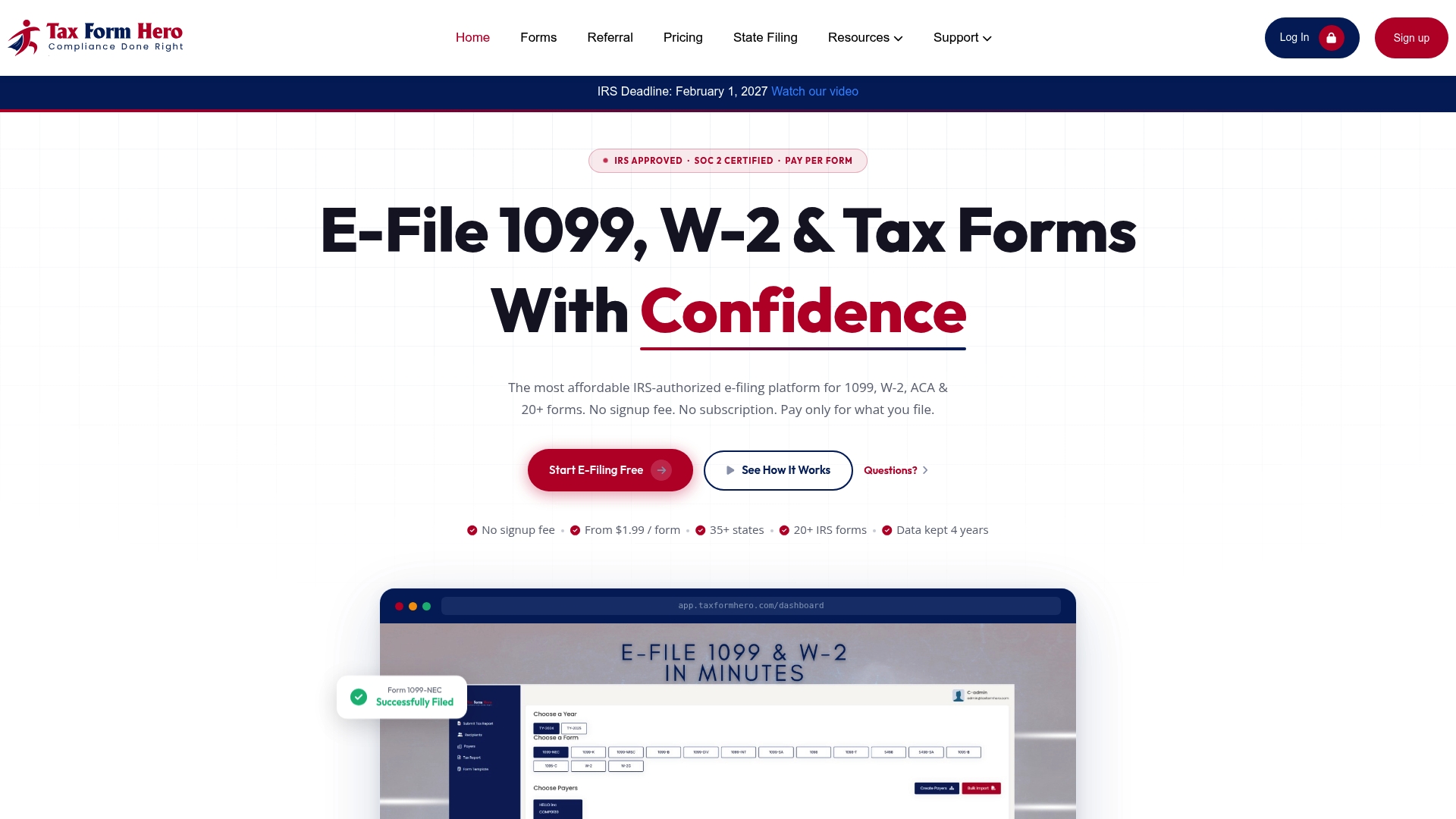
Ready to set up compliant delivery for this filing season? File your 1099-NEC forms online and get consent tracking, encrypted e-delivery, and IRIS transmission handled in one place.
This article is general information, not a substitute for advice from a qualified financial advisor. Consult a qualified financial professional about your own circumstances before acting on anything here.
FAQ
Do I Need a 1099 to File My Taxes?
If you received nonemployee compensation, interest, dividends, or other reportable income, the payer is required to furnish you a 1099 showing that amount. You can still file your tax return using your own records even if a 1099 arrives late or gets lost, since the income itself, not the form, is what you report.
What Should I Check Before Choosing Electronic 1099 Delivery?
Confirm that your delivery method captures affirmative consent, uses the required “IMPORTANT TAX RETURN DOCUMENT AVAILABLE” notice language, and has a fallback process for undeliverable statements, all specified under 26 CFR §301.6056-2. A compliant setup also keeps posted statements accessible through October 15 of the following year.
Is a DoorDash Driver Considered a 1099 Worker?
Drivers who work as independent contractors for gig platforms typically receive a 1099 form reporting their earnings rather than a W-2, since they are not treated as employees. The specific form depends on payment volume and type, but the classification itself comes from the working relationship, not the platform.
Can I File My 1099 Forms Directly With the IRS Online?
Yes, the IRS Taxpayer Portal, IRIS, allows manual entry or CSV upload for filing information returns directly, and it supports downloads of up to 100 forms per batch. Filing through IRIS requires a Transmitter Control Code, and downloading a form from IRIS does not by itself satisfy the separate obligation to furnish a copy to the recipient.
Sources
- Publication 1179, General Rules and Specifications for Substitute Forms
- 26 CFR §301.6056-2 Electronic furnishing of statements
Recommended
- 1099 Electronic Delivery Consent: IRS Rules for 2026
- E-Delivery vs Mail 1099: Which Meets IRS Requirements?
- Avoid 1099 Rejections: 8 Compliance Checks for U.S. E Filing Software
- E-file 10+ 1099s in the U.S.: IRIS or Vendor, TIN Match

File Information Returns With Confidence
TaxFormHero supports 20+ IRS information returns, including 1099 and W-2 forms, with bulk Excel import, name/TIN matching and encrypted recipient delivery.
Explore TaxFormHero