1099 SSN Masking: 6 Compliance Steps for Payroll Teams

Masking an SSN on a 1099 recipient copy is permitted and encouraged. Payers may truncate the first five digits of a payee’s Social Security number on Copy B, showing only the last four (*--1234 or XXX-XX-1234), according to IRS guidance on truncated taxpayer identification numbers. Copy A, filed with the IRS, must always carry the full, unmasked TIN.
TL;DR:
- Masking SSNs on recipient copies allows truncation of the first five digits, but the full, unmasked TIN must always be filed with the IRS on Copy A.
- Use consistent formats such as *--1234 or XXX-XX-1234 across all recipient copies to avoid reconciliation errors and ensure compliance.
- Implement truncation by verifying software settings, testing output, and safeguarding full TINs through encryption and secure storage.
- Masking reduces exposure risks but does not prevent mismatch notices caused by incorrect name and TIN combinations, which require pre-filing TIN matching.
- Ensure delivery channels are secure, avoid sending unmasked TINs via email, and log access to sensitive data to comply with privacy and security standards.
What SSN masking means and where the rule comes from
SSN masking, also called TIN truncation, replaces the first five digits of a recipient’s Social Security number with asterisks or the letter X, leaving the last four digits visible. The practice is authorized under Regulations section 301.6109-4 and detailed in Publication 1179, which gives formatting examples and printing guidance for payee statements. The purpose is risk reduction: a lost or intercepted mailing, a misdirected email, or a photographed document exposes far less personal data when the SSN is partially hidden.
- Truncation applies to the TIN shown to the recipient, not to the data filed with the IRS.
- The accepted formats are *--1234 or XXX-XX-1234, with the last four digits always visible.
- The security intent aligns with NIST privacy guidance, which treats limiting SSN exposure as one layer of a broader data protection strategy, and with FTC guidance on tax identity theft, which identifies tax documents as a common identity-theft target.
Need to get this filed? You can e-file Form W-2 online with TaxFormHero, which is IRS-authorized and charges per form, not per month.
Which forms and copies allow masking
Truncation rules differ by copy type, and mixing them up is the most common compliance error payroll teams make.
- Recipient copies of the 1099 series (Copy B and similar payee statements) may show a truncated TIN.
- Copy A, the version transmitted to the IRS, must always contain the full, unmasked TIN. No exceptions.
- The payer’s own TIN or EIN is never truncated on any copy, recipient or IRS-facing.
- W-2 forms follow separate Social Security Administration guidance and are not governed by the same 1099 truncation rule.
- Whatever format you choose for one recipient copy should appear the same way on every other copy issued to that same payee, to avoid confusion during reconciliation.
How to implement SSN masking on recipient copies
Turning the rule into a repeatable process takes a short sequence of checks, not a policy rewrite.
- Confirm your filing software or PDF template has a truncation setting for recipient copies, and verify it only affects Copy B, not Copy A.
- Test the output on a real PDF before mass production. Publication 1179 notes that machine print is preferred and photocopies are not acceptable for payee statements.
- Apply one consistent format, either *--1234 or XXX-XX-1234, across every recipient copy in the batch.
- For electronic delivery, use encrypted e-delivery or a secure portal. Never attach a spreadsheet of unmasked SSNs to a standard email.
- For mailed copies, check that window envelopes do not expose account numbers or partial TINs through the window, a mailing error Publication 1179 specifically warns against.
- Store the full, unmasked TIN in a secure, access-controlled system reserved for filing and audit purposes, and log who accesses it.
Pro Tip: Run a small test batch of five to ten recipient PDFs through your actual printer and envelope stock before a full mailing. Printing or window-alignment problems show up immediately on paper, not in a preview screen.
Rules, cautions, and mistakes that trigger CP2100/penalties
Masking protects the recipient, but it does nothing to prevent IRS mismatch notices, which come from a different problem: incorrect name and TIN combinations on the data filed with the agency.
- Name/TIN mismatches trigger CP2100 or CP2100A notices and can lead to backup withholding obligations if left uncorrected.
- Running recipient data through TIN Matching before filing catches most mismatches before they become notices.
- Truncating Copy A or the payer’s TIN is never allowed, under any circumstance.
- Inconsistent truncation formats across copies, or including an unmasked SSN in an attached worksheet, are common operational slips that undermine an otherwise sound process.
- When an error does reach the IRS, correct it through a corrected return rather than ignoring the notice; a partner resource on responding to IRS notices walks through the response process in detail.
Security and compliance practices that complement masking
Masking is one control among several. Treating it as the only safeguard leaves gaps that a determined bad actor or a careless internal process can still exploit.
- Run every payee record through TIN Matching before filing to cut down on CP2100 notices and penalty exposure.
- Encrypt TINs at rest and in transit, and apply multi-factor authentication and role-based access to any system holding unmasked data, consistent with NIST privacy guidance on limiting SSN exposure.
- Never send unmasked TINs by standard email. Encrypted e-delivery or a secure portal replaces that risk.
- Keep a retention and access log policy so you can show, during an audit, exactly who touched sensitive records and when.
Masking reduces the damage from a single exposed document, but it does not replace encryption or access controls as described in NIST’s privacy framework; the two work together, not as substitutes for each other.
TaxFormHero implementation notes and author expertise
The platform applies controls directly in its filing workflow. It offers instant TIN verification before a return is submitted and provides encrypted e-delivery as a recipient-copy option. Pay-per-form pricing allows teams to apply these protections without committing to a subscription. Each feature aligns with steps in the checklist above: TIN verification replaces manual matching, and encrypted delivery mitigates standard-email risks. For deeper procedural detail, see the guides on TIN Matching and sending 1099s electronically.

Getting masking right with limited staff time
Masking is the easiest of these controls to implement and the one most teams reach for first, but it should come third, not first. Verify the TIN before you file. Secure the delivery channel before you mail or send anything. Only then does a truncation template matter. Small teams get the most value by fixing the sequence, not by adding more tools, and by checking IRS and software vendor updates each filing season for changes to the rule.
— Nazrul
How TaxFormHero handles masking, TIN verification, and delivery together
Payroll teams juggling these steps manually tend to lose time on the parts that matter least: reformatting PDFs, re-checking mismatches, and tracking which recipient got which delivery method. TaxFormHero handles TIN verification, truncated recipient PDFs, and encrypted e-delivery inside one pay-per-form workflow, with no subscription or signup fee.
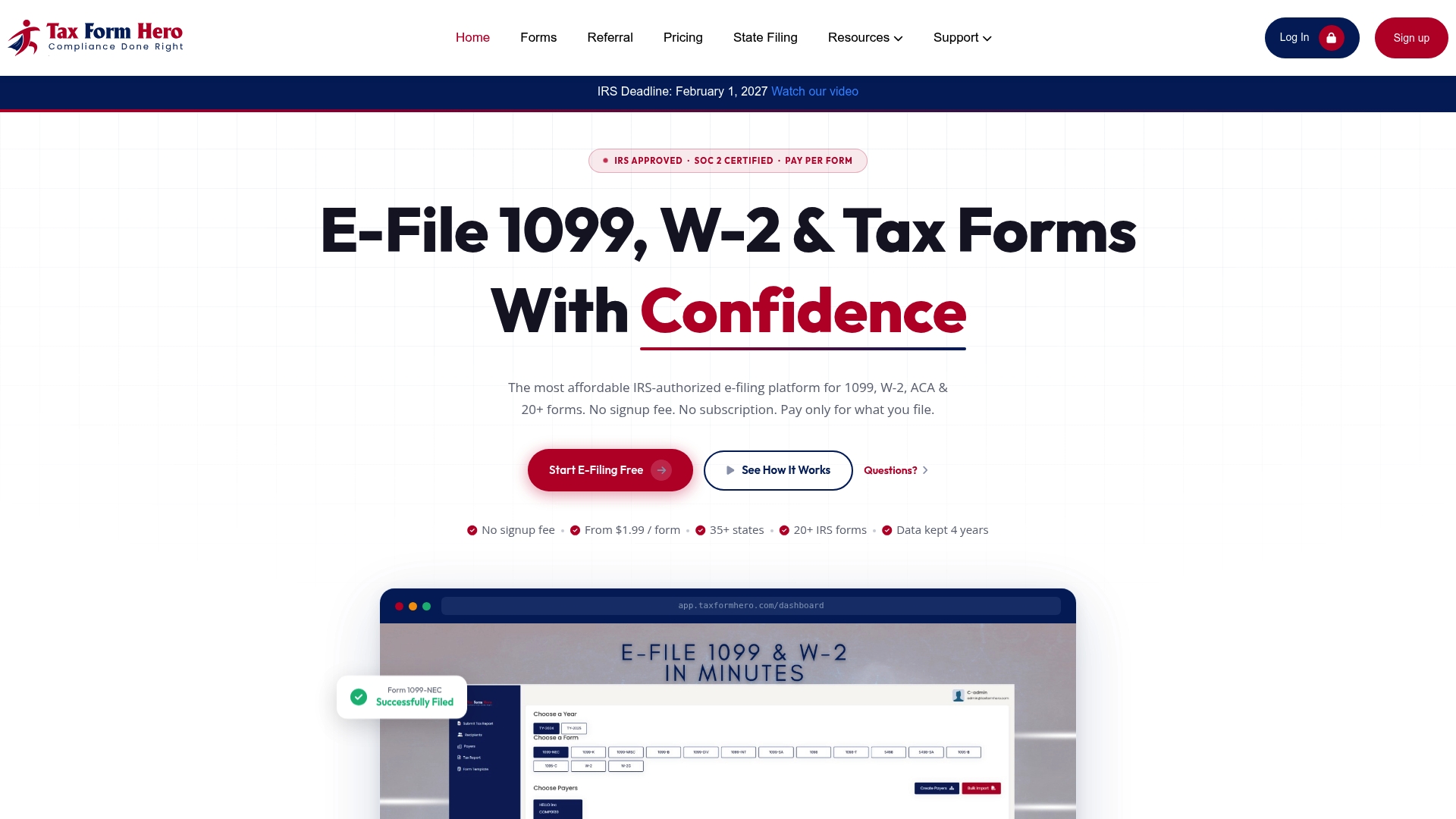
- Instant TIN verification runs before submission to help reduce mismatch notices.
- Encrypted e-delivery and print-and-mail options cover electronic and paper recipient copies.
- The platform follows data handling standards to secure information.
Start a return on the 1099-NEC filing page or review add-on costs, including TIN matching and encrypted delivery, on the pricing page.
This article is general information, not a substitute for advice from a qualified financial advisor. Consult a qualified financial professional about your own circumstances before acting on anything here.
Sources
- Truncated taxpayer identification numbers
- NIST privacy guidance (SP 800-63A)
- What to know about tax identity theft
FAQ
Why is the IRS not recognizing my Social Security number?
A mismatch usually means the name and SSN combination on file does not match Social Security Administration records, often due to a typo, a recent name change, or a transposed digit. Running the record through TIN Matching before filing identifies the mismatch so it can be corrected ahead of submission.
How do I mask an SSN on a 1099?
Replace the first five digits with asterisks or the letter X, leaving the last four visible, in the format *--1234 or XXX-XX-1234, as described in IRS guidance. This format applies only to the recipient’s copy, never to Copy A filed with the IRS.
Does a 1099 show the Social Security number?
The recipient copy (Copy B) may show a truncated SSN instead of the full number, following the format detailed in Publication 1179. Copy A, the version sent to the IRS, always contains the full, unmasked SSN or EIN.
Can a 1099 be issued without an SSN?
A 1099 generally requires a valid TIN, which can be an SSN, EIN, or ITIN depending on the recipient’s status, and filing without one can lead to backup withholding requirements. Payers facing a missing or unverifiable TIN should request a completed Form W-9 from the recipient and use TIN Matching to reduce mismatch notices before filing.
Recommended
- Payroll Teams: 5 Step 1099 State Filing Checklist for 2026 ($2,000)
- U.S. Payers: 1099 State Requirements for 2026 and IRIS Playbook
- 1099 Deadlines 2027: Feb 1 & Mar 31, IRIS/TCC Checklist for Small Teams
- The 1099 Compliance Checklist Every Business Needs

File Information Returns With Confidence
TaxFormHero supports 20+ IRS information returns, including 1099 and W-2 forms, with bulk Excel import, name/TIN matching and encrypted recipient delivery.
Explore TaxFormHero